
- The city-state is one of the most digitized payment markets in the world, yet cash in circulation has been rising since 2021.
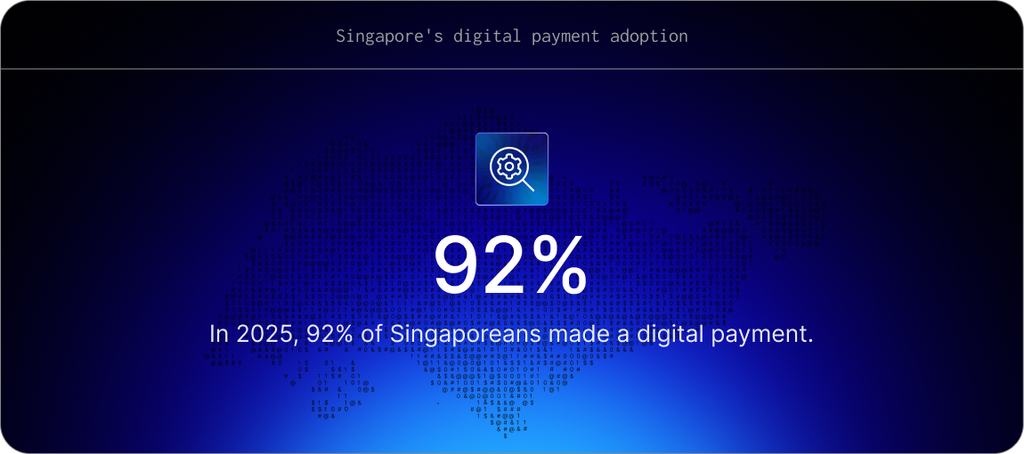
- In 2025, 92% of Singaporeans made a digital payment, while check volumes are falling by almost 28% a year.
- The PayNow instant transfer system covers more than nine in 10 Singaporeans and about 350,000 businesses.
- New AI guidelines require banks to include a kill switch and rollback path on high-risk systems.
Singapore’s banks and financial system have come a long way since the Spanish dollar was used as the city-state’s de facto currency in the 1800s. It wasn’t until June 1967, two years after independence that the former trading post and colony of the British Empire introduced its own currency, the Singapore dollar. Fast-forward to today and Singapore is ranked fourth on the 2026 Global Financial Centres Index, which measures 120 cities on a range of factors, including competitiveness, reputation and legal and regulatory frameworks. Just three points separate Singapore from the world’s top financial hub of New York, with London and Hong Kong ranked second and third, respectively. The Monetary Authority of Singapore (MAS) is the city-state’s central bank and integrated financial regulator, overseeing a sector that includes traditional banks, pension funds, insurance companies, stock exchanges, remittance firms, FinTechs and payment service providers, among others.
Singapore’s total assets under management increased by 10.1% in 2025 to S$6.7 trillion, driven by broad-based growth across the banking, insurance and asset and wealth management sectors, the MAS says in its latest annual report.
The FinTech sector is also thriving, fueling Singapore’s rise as one of the most digitized payment markets in the world. In 2025 alone, 92% of Singaporeans made a digital payment, while check volumes are falling by almost 28% a year, according to a report by PwC Singapore and the Singapore FinTech Association (SFA).
Despite the rise in digital payments, the government aims to establish a “cash-lite” economy rather than a cashless society. This is to avoid issues being experienced by countries such as Sweden – which is set to become the world’s first cashless society but is now facing challenges such as rising cyber fraud and financial exclusion among the elderly and less tech-savvy members of the population.
In our Banking is Local series, we explore how Singapore built one of the world’s top safe-haven financial hubs and why its cash-lite model is helping to shape its FinTech and AI regulations.
What are the top banks in Singapore?
Singapore’s banking sector is dominated by three local banks, alongside a range of foreign players competing for a slice of the financial safe haven’s corporate, private and cross-border businesses.
| Bank | Assets under management (wealth management; H1 2026) |
| DBS Bank | S$516 billion |
| OCBC | S$350 billion |
| UOB | S$204 billion |
Source: Yahoo Finance, OCBC and Wealth Briefing Asia
While many banks in Singapore focus on high-net-worth individuals and growing their wealth divisions, two unique financial products have emerged to boost the long-term financial goals of ordinary citizens.
The first is CPF Lifelong Income for the Elderly (CPF LIFE), a national longevity insurance annuity scheme that is managed by the Central Provident Fund Board, a government body that operates under the Ministry of Manpower.
Singapore citizens and permanent residents born after 1958 who have at least S$60,000 in their CPF retirement savings fund before the age of 65 are automatically enrolled in CPF LIFE.
Citizens begin paying into their CPF savings fund when they start working, while the contribution rate depends on a person’s age. These can range from 12.5% to 37% of a monthly salary, while employers are also required to contribute to workers’ savings funds. After retirement, citizens have a choice of three plans that offer different monthly payments over the remainder of their lives.
The second is the government-backed Singapore Savings Bond (SSB) for individual investors. Managed by the MAS, the 10-year SSB combines the relative safety of government debt with the freedom of a standard savings account. With a minimum investment of S$500, it features an escalating interest rate that rises the longer the bond is held, while there is no penalty for cashing out early.
What digital payments and apps are Singaporeans using?
With more than 1,800 FinTech firms operating alongside banks, Singapore has become a global leader in digital payments, underpinned by progressive regulations and strong public-private partnerships, according to the PwC Singapore and SFA report.
“With the adoption of technologies like real-time payments, digital wallets, blockchain and artificial intelligence, Singapore has become a regional and global hub for payments innovation,” the report notes.
This includes the introduction of the national instant payment system PayNow, as well as the expansion of mobile wallets and cross-border payment links through Project Nexus, a Bank for International Settlements Innovation Hub project.
A report by the MAS and Association of Banks in Singapore (ABS) shows that PayNow had about 11 million proxy registrations as of December 2025, covering more than nine in 10 Singaporeans and about 350,000 businesses.
Launched in 2017, PayNow is supported by 23 participant banks and six payment institutions and non-bank participants. It is primarily used for peer-to-peer transfers, in-store QR payments at hawker stalls and physical retail outlets, online merchant payments on e-commerce platforms and apps and enterprise payments, such as payroll. In 2025, PayNow processed about S$154 billion in consumer payment value and S$147 billion in business payments, as well as an additional S$371 million in cross-border value, the report notes.
Singaporeans also have a range of digital-only banks and other payment apps to choose from, such as DBS PayLah!, which allows users to transfer funds, pay bills, order food, book rides and buy movie tickets.
Grab is a homegrown FinTech that was originally launched as a ride-hailing taxi app in 2013 but has since expanded as an “everyday” super-app offering everything from meal and grocery deliveries to restaurant reservations and digital wallet and payment services.
The company has expanded into other countries across Asia, including Cambodia, Indonesia, the Philippines and Malaysia. In August, it reported that second-quarter revenue jumped 22% year over year to reach US$997 million, while it reached 54 million monthly transacting users during the same period.
Why is Singapore not becoming a cashless society?
Despite its reputation as a global hub for digital payments, the amount of physical cash in circulation in Singapore has increased every year since 2021 to reach S$69.45 billion in June 2026, according to government data.
Meanwhile, ATM withdrawals totaled S$55.14 billion in 2024 – more than all debit card payments at S$49.52 billion and representing over half of S$99.39 billion in credit card spend in the same year. This represents a gradual fall of about 14% over seven years rather than falling off a cliff, according to the PwC and SFA report. Cash also accounted for 10% of consumer-to-business payment value in 2025, slightly above a 9% average across card-led peers including Sweden, Australia, Hong Kong, Switzerland and the UK, the MAS and ABS report notes.
While many banks in other countries are closing down branches, their counterparts in Singapore have committed to opening more. According to an announcement by the ABS in June, key retail banks including DBS, OCBC, UOB and NETS have committed to providing an ATM, branch or cashpoint within 500 meters of every high-rise public residential building by the end of 2027.
The commitment is part of a 20-initiative effort to better serve the city-state’s rapidly aging population, where one in five citizens are now over the age of 65. The banks will also ensure there is either an ATM, branch or cashpoint within 500 meters of every transport hub, hawker center and major supermarket by the end of 2026, the ABS adds.
“This industry-led effort is the first of its kind in Asia and reflects a shared recognition across the banking sector that aging is a journey and that banking services must evolve alongside the evolving needs of seniors,” the ABS notes.
Why has Singapore added friction to instant payments?
In October 2025, MAS worked with retail banks to add deliberate friction to high-balance drawdowns in an effort to protect customers from cybercriminals. While it is a trade-off of convenience for security, customers have embraced the slowdown and have so far chosen to ringfence close to S$44 billion behind Money Lock, an initiative that prevents “locked up” amounts from being transferred digitally by anybody, including scammers.
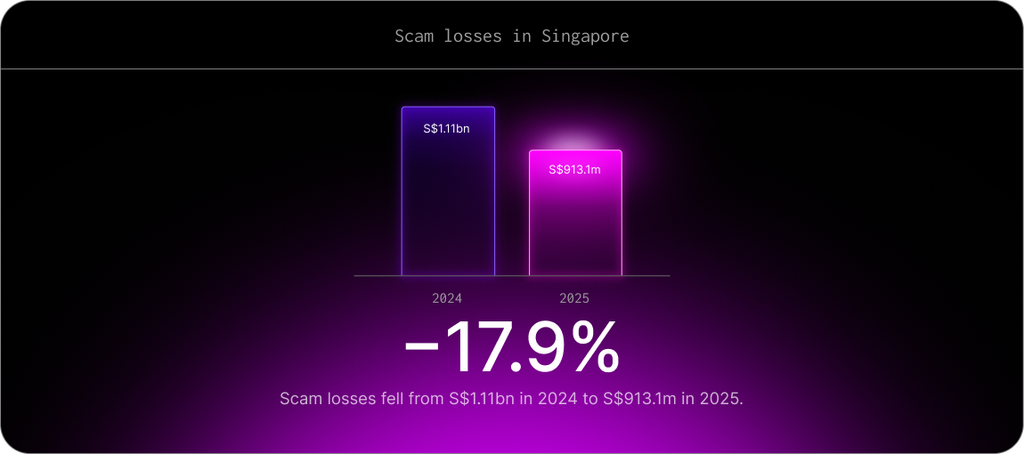
The effort is beginning to pay off, with the number of scam and cybercrime cases falling by 24.8% in 2025, according to data compiled by the Singapore Police Force. In terms of value, the losses from scams also fell by 17.9% to S$913.1 million in 2025, down from S$1.11 billion in 2024.
However, there is still more work to do. For example, the MAS and ABS report benchmarked PayNow against instant payment systems in 11 other markets and found that it lagged on one important measure: user protection. It also highlighted that dispute management and fund recovery are still primarily paper-based, with recall of funds passed manually between banks.
How is Singapore regulating AI in banking?
The MAS started working on AI financial regulations well ahead of the boom. This includes the MAS FEAT (Fairness, Ethics, Accountability and Transparency) Principles, a set of guidelines that were released in 2018 to ensure that the banking and financial sector use AI and data analytics responsibly.
This was followed by the Veritas toolkit to make them testable and Project MindForge, a collaborative industry initiative led by the MAS that developed a risk management toolkit that includes three publications covering traditional, generative and agentic AI technologies.
The new guidelines were launched in 2025 and require contingency measures including rollback path on high-risk systems and a “kill switch to deactivate the use case”, as well as a named accountable person. Human oversight is also graded – in, over, or out of the loop – while customers must have a route to question or request a review of an AI decision.
The publications include case studies from financial institutions. In one example, DBS said it shipped its CodeBuddy assistant with a contingency that allowed users to disable it, while Prudential holds plans to remove or replace an AI component outright. Another institution classified any use case with automated actions and no human in the loop as high-risk by definition.
What is the future of agentic AI payments in Singapore?
While the question of agentic AI payments had been deferred until liability was established, it may be coming much sooner than expected. On September 10, Ant International, Mastercard and Visa announced they had started collaborating on a Know-Your-Agent (KYA) interoperability framework to identify and verify AI agents that can make payments on behalf of users.
“AI agents are evolving from making recommendations to completing purchases on behalf of users. By 2030, AI agents are projected to orchestrate US$3 trillion to US$5 trillion of global consumer commerce,” the companies said in a joint statement.
“Underlying the mega-trend is the KYA architecture of payment networks and service providers, which establishes requirements and accountability, verifies agent identities, and ensures secure, trusted transaction execution.”
The companies added that they will collaborate through Singapore’s BuildFin.ai, a MAS platform that allows financial institutions, technology providers and researchers to develop and scale responsible AI solutions.
For nearly 60 years, Singapore and its banks have been renowned as a sanctuary for money, underpinned by a strong regulatory landscape as it built a modern financial system. The next challenge will be agentic AI payments but, based on Singapore’s early supervision of the technology, the liability question is sure to be a priority.
For more expert content on industry outlooks and innovation, subscribe to our newsletter or visit our Insights page.
Questions and Answers: Banking and payments in Singapore
Singapore’s banking sector is dominated by three local banks based on assets under management. DBS Bank is the largest, followed by Overseas-Chinese Banking Corporation (OCBC) and United Overseas Bank (UOB).