

#Market Trends
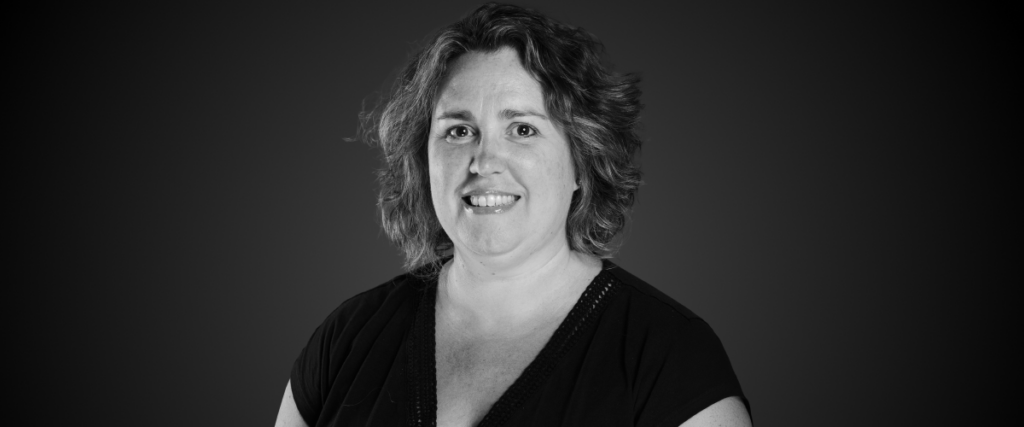
Naig Le Callonnec is a Strategic Product Manager at SBS, responsible for two areas within SBS Digital Core: Product & Pricing and Core Banking. Her role? To keep a close eye on market developments, understand the challenges banks face and translate them into concrete product decisions, always asking two questions: what should we build, and what value will it bring?
In this interview, she takes us behind the scenes of her role, where listening to customers and understanding their needs are central to her work. She also shares her perspective on the major transformations reshaping Core Banking and the questions influencing the way she thinks about products today. But her journey also spans 25 years of experience, projects carried out closely with customers from Tahiti to Guadeloupe, and countless encounters that have shaped the way she works.
Looking back at your career, which experiences have shaped the way you work today the most?
My early years at SAB* really shaped my career. I started in support and then moved fairly quickly into customer relations and projects. That’s where I learned how to really understand customers: their language, their challenges and their priorities. I also learned about banking and project management: how to get teams communicating with each other, manage crises and urgent situations, and make decisions while understanding what’s at stake behind each one. These are all things I still draw on today. *The core banking software provider SAB was acquired in 2019 and is now SBS.
How would you describe your role as a Strategic Product Manager, from identifying a need to translating it into the product?
It all starts with observing the market. I do a lot of research, read articles about the banking industry and attend conferences, especially those where bankers speak directly about their experiences. I like having that connection to what’s actually happening on the ground. I also spend a lot of time talking to customers, and that’s probably the most fascinating part. It’s not enough to listen to a customer: you have to ask questions to understand what lies behind their needs and get to the root of the problem.
From there, we gradually move from strategy to execution. As a Strategic Product Manager, I start with a market trend or challenge. For example, even though customers increasingly use several banks, when they feel recognized by one bank, they tend to buy more products from it. So the challenge for the bank is to find ways to reward that loyalty. My role is to identify that need and translate it into business challenges. The Operational Product Manager then defines the capabilities the product needs to offer, before the Lead Product Owner and Product Owner take over to actually build the solution.
I draw on my 25 years of experience in banking, but you constantly have to challenge what you know. The market moves quickly, and what we think we know always needs to be tested against the reality banks face today.
What are the main challenges Core Banking needs to address today?
One of the biggest challenges for Core Banking is enabling the bank to operate smoothly, processing transactions quickly and as automatically as possible while remaining reliable. And, of course, there’s AI. When you listen to bankers, their questions aren’t just about technology. They’re also organizational and human: what role should AI play within the organization? There are also major concerns around sovereignty and security. For Core Banking, this raises two key questions in particular: can my information system integrate AI securely? And how will AI transform customer behavior?
In this context, what does modernizing Core Banking actually mean to you?
For me, modernizing Core Banking is first and foremost about evolving legacy systems to meet new expectations and use cases. Today, people expect everything to happen instantly, regardless of the channel, and Core Banking needs to keep pace with that evolution. With AI, this goes even further: is Core Banking ready to handle more complex use cases, where agents can act autonomously and humans increasingly step in to oversee and control? To me, modernization is precisely about making Core Banking capable of supporting these new uses.
There’s a lot of discussion about AI. Is there another trend you’re keeping a particularly close eye on?
One topic that perhaps gets less attention but that I find particularly interesting is disintermediation. With the rise of agents, we can imagine a future where some interactions with a bank happen without the customer being directly in contact with it. An agent could, for example, handle certain tasks on their behalf.
So the question becomes: what place will the bank retain in the customer relationship? Will it increasingly become a platform providing products that are distributed by other players, or will it seek to preserve that direct relationship? And inevitably, that also raises questions for Core Banking: does it need to become more open and composable so that it can integrate into distributed customer journeys? We don’t yet know exactly where all of this will take us, but that’s precisely what makes it so fascinating to watch.
Of the transformations you’ve been involved in, which are you most proud of?
When SAB joined SBS in 2019, we had a real ambition to modernize the solution and change how it was perceived. We were among the early advocates of a progressive approach to Core Banking modernization, evolving some of the existing components toward more modern and efficient solutions, particularly around reporting and instant payments. This approach strengthened the credibility of the transformation path we were pursuing, and we even won an award for it. I’m genuinely proud to have contributed to that transformation.
Do you have an anecdote from your work that you’d like to share?
When I worked in Professional Services, I was lucky enough to travel extensively to support customer projects: Tahiti, Guadeloupe, Mauritius, Réunion… At the time, we supported customers throughout the entire project, sometimes over very long periods. I spent a year and a half in Tahiti, 14 months in Guadeloupe and three months in Mauritius. I volunteered for these longer assignments because I liked being able to follow a project from start to finish and support the customer throughout the entire implementation phase. Having the opportunity to experience all of that through my work was a real privilege.
And when you’re not working, what really helps you switch off?
To really switch off, I do Breton dancing and longe-côte (sea wading). Living in Brittany definitely helps! I also read a lot, especially novels: crime fiction, science fiction, but plenty of other things too. I can go from Tolstoy to Tolkien!
What advice would you give to someone interested in working in Product Management?
My advice would be to talk to your customers. To really understand what they need, you have to dig deeper: what is their problem, and what’s causing it? You won’t truly understand that through three emails or indirect conversations. You need to speak with them directly.