


#Digital Banking
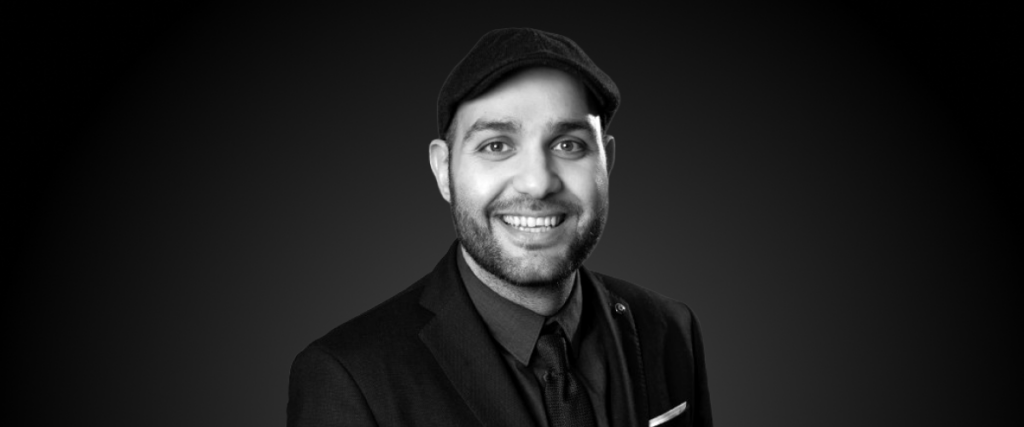
Mehdi Metari never planned to become a UX designer. Trained in computer science in Algeria, he was also passionate about drawing and music, two worlds he never thought he could reconcile. Then, while pursuing a master’s degree in design in France around 2010–2011, he discovered a third path: UX. At the time, it was still a relatively new discipline in France, combining both technical expertise and creativity. He was part of one of the very first cohorts to embrace it.
Today, as Head of Product Design, Digital Engagement, at SBS in Dubai, he leads the user experience of the SBS Digital Banking Suite, from user research to product delivery, in a role that is both strategic and hands-on. In this interview, he shares his perspective on what makes great design in financial services and reflects on the lessons he has learned over fifteen years in the profession.
What does your job as Head of Product Design look like on a day-to-day basis?
My role is to lead a project end-to-end. Let’s take a practical example: a Product Marketer decides to add secure messaging to the product. My team gets involved from the very beginning. We start with a research phase: understanding the need, analyzing the current situation, and looking at what others are doing. Then we move into the details: user journeys, features, and use cases. I first create black-and-white wireframes so I can focus on the experience itself without being distracted by aesthetics. We iterate a lot at this stage before moving on to the final design, relying on the design system (the backbone of the product) which can sometimes be as helpful as AI. After a final review with the Product Owner, Product Marketer, and developers, we hand over the screens.
Beyond that, I also have a more transversal role: facilitating workshops, engaging with stakeholders, conducting user testing, and managing the design team. It’s a hybrid role, both strategic and operational.
How do you balance creativity with business strategy?
I really like that question. I recently read a book by Rick Rubin, the renowned American record producer, where he explains that we are all creative, not just artists. Even someone rearranging their living room is being creative. In our profession, creativity exists within a framework. We don’t design simply to make things look beautiful or create a “wow” effect; our primary goal is to solve a problem. And that requires a structured process: user research, benchmarking, workshops, testing, and iteration. Creativity plays a role at every stage, but always in service of a clear objective. I often say that creativity isn’t a tap you can turn on at will. Before asking for a beautiful design, you need to understand the problem you’re trying to solve. In the end, strategy and creativity are not opposites. Strategy provides direction, and creativity finds the right solutions within that framework.
In your view, what makes an excellent user experience in financial services?
Above all, it’s an experience that is simple, transparent, and reassuring. Users should be able to accomplish what they need in just a few steps and with minimal effort. People shouldn’t have to learn how to use an application, they expect it to work immediately.
But in finance, there is an additional dimension: trust. We are dealing with people’s money, so security is essential. Authentication, action validation, confirmation steps, everything must be designed to reassure users without making the experience cumbersome. That’s the real challenge: finding the right balance between simplicity and security. Where a typical application might rely on a single “confirm” button, banking services often require several validation steps. That’s perfectly normal because the stakes are much higher. A great financial UX is not only smooth and intuitive, it is also reliable and secure.
What are the main UX challenges in the banking industry today?
The first challenge is access to data. Without direct access to users, it becomes difficult to fully understand their needs and design the right journeys. The second challenge is competition. Companies like Revolut and N26 have set extremely high standards for user experience and innovation. They push us to constantly improve, but they can also create a sense of frustration when it feels like we are not moving as quickly. And users notice. They compare experiences all the time and expect the same level of quality everywhere they go.
You work closely with clients. How do those interactions influence the evolution of SBS Digital Banking Suite?
Working with our clients allows us to continuously enrich SBS Digital Banking Suite by evolving it around their needs. As a result, we are constantly looking for the right balance: preserving the integrity of our product while learning from client requirements. It’s demanding, but also very stimulating. For example, we already had a well-established onboarding journey. However, Fiducial’s perspective, with more complex business scenarios, multiple stakeholders, and legal roles, challenged us to rethink and improve that process. That’s something I find truly rewarding on a daily basis.
How is AI transforming your work, and where do you see design heading in the coming years?
AI has become a real copilot. From the research phase onward, it helps us approach clients with a stronger foundation. On one project, I had to design for a legal administrator persona I knew very little about. AI helped me understand their responsibilities and pain points even before meeting the client. We also use AI to test ideas, challenge user journeys, and refine concepts more quickly. It doesn’t replace our work, but it makes us more relevant and better prepared. More broadly, I believe the profession will shift toward greater expertise and less execution. Production tasks, such as designing screens and creating components, will become increasingly automated. Our value will move toward vision, decision-making, understanding complex challenges, and guiding the direction of products.
After all these years, what is the most important lesson you have learned?
That everything ultimately comes down to human relationships. Beyond technical skills or successful projects, what stays with you are the interactions: a manager who supports you, a colleague who thanks you, or a satisfied client. Over time, I’ve realized that these moments often matter more than the products themselves. We talk a lot about performance and technology, but we should place even more emphasis on people.