

#Digital Banking
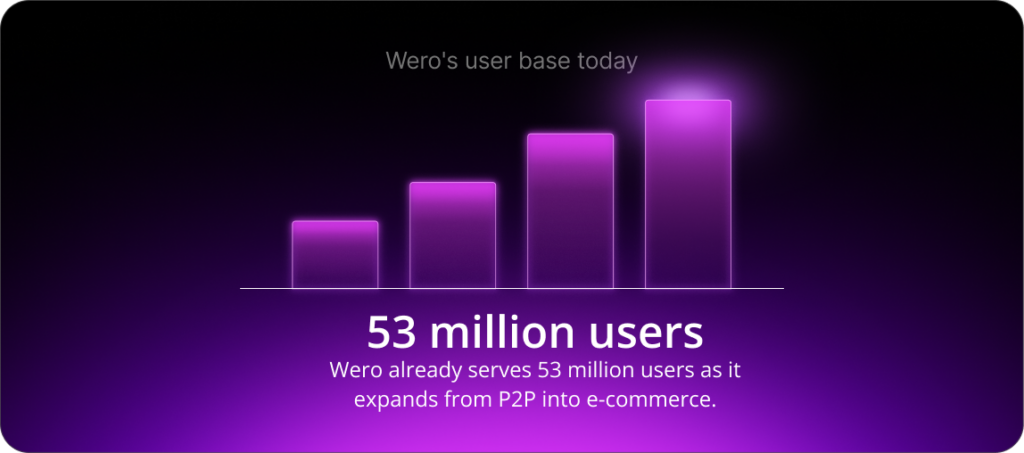
- Wero already serves 53 million users and is moving from peer to peer payments into e-commerce.
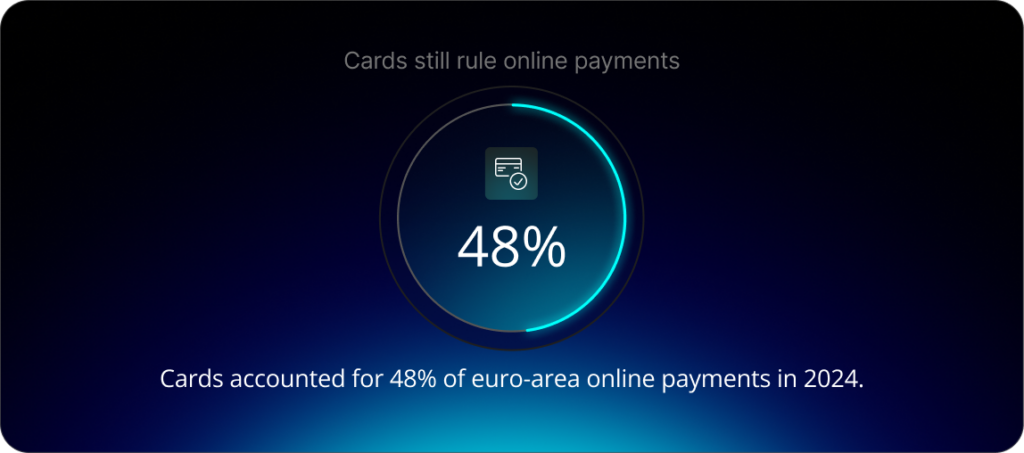
- In the euro area, cards accounted for 48% of online payments in 2024 versus 29% for e-payment solutions.
- 62% of French consumers and 56% of German consumers would be willing to use Wero, rising to 65% in Belgium.
At the Instant Payments Summit in Frankfurt, the discussion around Wero was often most revealing during audience questions. People were not asking whether Wero could be integrated. Instead, they were wondering what happens after go-live. Why should consumers switch when cards already work perfectly well? How can Wero coexist with established local wallets such as iDEAL and Bizum? And perhaps most importantly, how can banks ensure that Wero is not just available, but actively used?
One question went even further. What does European payments sovereignty mean in practice when Wero is designed to put European banks closer to the payment moment, but consumer habits are still being shaped by Apple Pay, Google Pay and other global wallets?
Those questions signal a shift. Wero already serves 53 million users and is moving from peer to peer payments into e-commerce. But the market conversation has moved past technical readiness into something harder. It’s making Wero visible, trusted and chosen at the moments where payment habits are formed.
Wero’s adoption challenge
Despite its early momentum, Wero’s greatest challenge now lies in turning availability into active usage. That will not happen automatically. In the euro area, cards still accounted for 48% of online payments in 2024, while e-payment solutions such as wallets, PayPal and mobile apps accounted for 29%. Wero is entering a market where consumers already have familiar ways to pay.
The challenge is not availability alone. Payment habits are built through repetition, trust and convenience. Consumers will not switch because Wero exists. They will switch if it feels easier, safer and more useful than the payment methods they already know.
For banks, that changes the task. Wero is no longer just an integration project. It is an activation challenge. Banks need to make it visible in the app, clear in onboarding, trusted in communication, present at checkout and compelling enough for consumers to try it, then use it again.
Driving consumer adoption
Consumer interest in Wero already exists. Surveys show that 62% of French consumers and 56% of German consumers would be willing to use the solution, rising to 65% in Belgium. However, willingness to try a new payment method is not the same as adopting it permanently. ECB consumer research provides a useful indication of what matters most to users. Higher security standards were cited by 37% of respondents as a reason to adopt a new payment method, followed by ease of use (34%) and lower costs (29%). Privacy (27%) and speed (21%) also ranked highly.
The implication for Wero is clear. Consumer interest will not convert into habit through novelty alone. Adoption depends on three things coming together: a seamless experience that matches or exceeds what consumers already use, trust that the payment is secure and protected, and enough repeated exposure at real payment moments to make Wero feel familiar.
Each of those sits squarely in the bank’s domain. Banks control the app, the onboarding journey, the authentication experience, and much of how customers discover and understand new payment options. If Wero is buried three screens deep in a banking app, or if the first customer experience is confusing, willingness will not convert into usage.
Building merchant reach
Consumer demand alone will not determine Wero’s success. Merchant acceptance is where the adoption story changes from awareness to behavior. P2P payments can build initial familiarity, but payment habits are ultimately formed at checkout. The more frequently consumers encounter Wero during everyday purchases, the more likely it is to become part of their regular payment behavior.
That makes Wero’s expansion into e-commerce and point of sale particularly significant. As Wero becomes visible at online checkout, and eventually at point of sale, the stakes for banks increase. Customers will expect the full journey to feel smooth, trusted and clear, from activation and onboarding to authentication and payment execution.
If the bank journey is hidden, confusing or poorly explained, the merchant may be ready but the customer will not follow through. The timing also matters. Once consumers default to Apple Pay, Google Pay, PayPal or a strong local wallet at a particular checkout moment, reactivation becomes harder. Wallets become powerful through habit. Banks that make Wero visible and usable before those habits solidify will have a meaningful advantage.
Interoperability is how Wero reaches European scale
In markets with strong local payment habits, Wero does not need to erase what already works. It needs to build on it.
Two distinct models are already in motion. In the Netherlands, iDEAL is migrating into Wero, giving it inherited usage, merchant reach and consumer trust from a payment method that accounts for more than 70% of Dutch e-commerce.
In Spain and beyond, the approach is interoperability. In February 2026, Bizum, Bancomat, SIBS/MB WAY, Vipps MobilePay and EPI signed a Memorandum of Understanding to enable cross-border payments through a central hub, covering approximately 130 million users across 13 countries.
The distinction matters. Migration means Wero absorbs an existing scheme. Interoperability means Wero connects to local schemes while each retains its brand and experience. Both paths help Wero scale without forcing consumers into a cold start.
Banks operating across these markets will not manage one Wero rollout. They will manage several, each with its own transition path, timeline and customer communication needs.
| Online payment method (euro area, 2024) | Share of online payments |
| Cards | 48% |
| E-payment solutions (wallets, PayPal, mobile apps) | 29% |
| Direct debits | 5% |
| Instant payments | 5% |
| Other payment methods | 13% |
Wero enters a market where cards and digital wallets are already deeply embedded in consumers’ payment habits.
Sovereignty needs a practical definition
European payments sovereignty is often used as one of the strongest arguments for Wero. But the questions raised in Frankfurt showed that banks are looking for a more practical definition.
For banks, sovereignty comes down to control over payment routing, transaction data, the customer relationship and the resilience needed to run instant payments around the clock. These are not abstract policy goals. They shape infrastructure choices, fraud and dispute handling, customer experience design and the ability to adapt as Wero moves into new use cases.
That is why adoption matters. Wero does not make sovereignty real simply by existing. Its strategic value lies in helping banks keep the payment moment, the data and the customer relationship from drifting further away as European payments evolve.
The role of banks in Wero’s adoption
While EPI is responsible for developing and expanding Wero, banks will play a decisive role in determining whether it achieves widespread adoption.
For banks, Wero’s success is about more than supporting a European payments initiative. It is a way to remain present in one of the most important customer interactions they still influence: the act of paying.
That influence depends on execution. Banks control many of the touchpoints where payment habits are formed, from mobile banking apps and onboarding journeys to customer communications, merchant partnerships and checkout experiences. Adoption, therefore, requires more than technical integration. Customers must be encouraged to discover, understand and trust the experience as well as encounter it often enough to use it again.
The stakes are high because competition in the payments space continues to intensify. Digital wallets have become deeply embedded in many consumers’ purchasing journeys, often becoming the default payment method once adopted.
This is why visibility matters. Banks that make Wero easy to find, easy to understand and easy to use will be better positioned to drive adoption while reinforcing their own role within the payments ecosystem.
Wero is not a compliance project
Adoption success for Wero will depend on a coordinated effort between EPI, banks, merchants and ecosystem partners. Wero needs banks to drive awareness, activation and everyday usage. In turn, banks benefit from maintaining a stronger role in the customer payment experience as competition from global wallets and technology platforms continues to intensify.
This means going live on Wero is only the beginning. Banks that treat it as a compliance exercise risk missing the opportunity to build meaningful customer adoption. Those that actively promote Wero through their apps, customer communications and payment journeys will be better positioned to realize its value.
At the same time, banks need the technical agility to support Wero as it evolves. As new capabilities, requirements and use cases emerge, integration complexity can quickly increase.
That is where the right partner matters. SBS Wero Connect helps banks simplify the execution layer, stay aligned with EPI evolution and embed Wero into existing customer payment journeys without adding unnecessary operational burden. So banks can focus on what matters most: making Wero visible, trusted and usable in the payment moments where adoption will be won.
For more expert content on industry outlooks and innovation, subscribe to our newsletter or visit our Insights page.
Get in contact with a member of our team today.
Q&A: Key questions on Wero and its rollout
Wero is a payment solution developed by the European Payments Initiative (EPI). Launched in 2024, it is already available across multiple European markets and is expanding beyond P2P payments into e-commerce and point-of-sale transactions.
The next challenge for Wero is adoption. Consumers already have access to a wide range of payment methods, including cards, digital wallets and local payment solutions. Success will depend on encouraging consumers and merchants to make Wero part of their everyday payment habits.
Three factors will be particularly important: technological excellence, merchant acceptance and interoperability with existing payment ecosystems. Consumers expect payment solutions to be secure, simple and convenient; financial incentives and rewards are a plus. Merchants are looking for cheaper alternatives to cards, with a pan-European reach.
Banks control many of the customer touchpoints where payment habits are formed, including mobile banking apps, onboarding journeys and customer communications. As a result, adoption requires more than technical integration. Banks must actively promote and embed Wero within the customer payment experience.