

#Core Banking
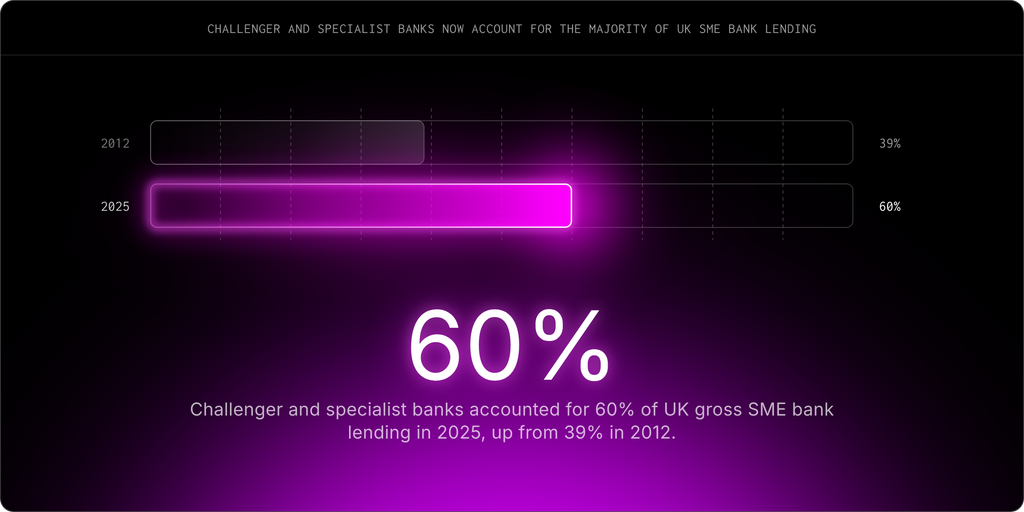
- Applying the retail lending playbook to SMEs risks underserving the segment. In the UK, challenger and specialist banks took 60% of gross SME bank lending in 2025, up from 39% in 2012.
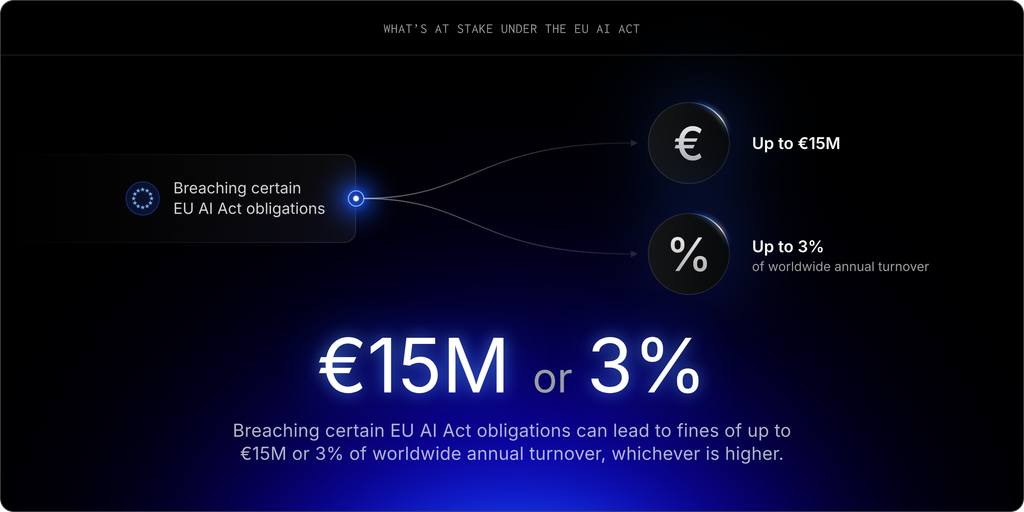
- Under the EU AI Act, AI systems that evaluate the creditworthiness of natural persons are high risk, and breaches of certain obligations can lead to fines of up to €15 million or 3% of worldwide annual turnover. Lending to sole traders and to incorporated SMEs may therefore need different governance.
- A composable digital lending platform lets banks reuse common capabilities such as KYC, document capture and decisioning, while configuring the level of automation by product, value, risk and complexity.
Banks have spent years digitizing lending. Applications have moved online, onboarding has become faster, and automation now handles tasks that once required manual intervention. In retail lending, this has meant faster decisions, greater self-service and, increasingly, credit embedded directly into digital customer journeys. However, SME lending presents a different challenge. Smaller businesses increasingly expect the speed, transparency and convenience of retail lending, while their financing needs often require more tailored assessment and specialist support. Yet digitization has not delivered the same improvements in speed and access for SME borrowers as it has for consumers.
The stakes are significant. The European Commission estimates an annual SME financing gap of around €39 billion in the EU. Meanwhile, competition for SME borrowers is intensifying. In the UK, for instance, challenger and specialist banks accounted for 60% of gross SME bank lending in 2025, up from 39% in 2012. Including non-bank lenders, these providers collectively accounted for 68% of overall SME lending.
For traditional banks, losing ground in SME lending also means putting valuable customer relationships at risk. The challenge, then, is not simply to digitize SME lending further. It is to determine whether the origination model itself is right for the segment. Retail and SME lending have different characteristics, and applying the same playbook to both risks underserving the businesses banks are trying to reach.
The problem with applying the retail playbook to SME lending
It’s easy to understand why banks have pursued a common approach to digital origination. Retail lending provides an attractive model to follow. Consumer credit tends to be high volume and standardized, with large quantities of structured customer data available to support decisioning. That makes speed, straight-through processing and self-service natural priorities. The more efficiently a bank can take a customer from application to decision, the stronger the economics can become.
SME lending is structurally different. An application may involve several stakeholders rather than one borrower. Financial information can be more heterogeneous, less standardized and distributed across financial statements, transaction data, documents and systems. The sums involved can be greater, compliance more complex and the context of an individual business more important to understanding its creditworthiness.
Treating the two as versions of the same problem can therefore produce the wrong result.
| Retail lending | SME lending | |
| Volume | High volume | Lower volume, higher-value applications |
| Data | More standardized and data rich | More heterogeneous, fragmented and often distributed across multiple sources |
| Stakeholders | Typically one borrower | Often multiple stakeholders |
| Journey | Well suited to self-service and straight-through processing | Can range from highly automated to assisted or relationship-led, depending on lending amount, risk and complexity |
| Decisioning | Greater scope for standardized, automated assessment | Can range from standardized and automated for lower-risk applications to highly contextual for higher risk and complexity |
| Primary priorities | Speed, conversion and convenience | Data access, appropriate risk assessment and efficient time to funding |
| Compliance/complexity | Generally more standardized | Heavier compliance and greater process complexity |
Are banks measuring SME lending success using retail KPIs?
In retail lending, success is often associated with operational efficiency. Banks may track straight-through processing, digital completion, containment, deflection and cost per application. Those are useful metrics in a high-volume, standardized environment, but they do not capture everything that matters in SME lending.
Efficiency still matters for SMEs, but it needs to be measured across the whole journey. Banks should track time to decision, time to funding, application conversion and completion and origination efficiency, while maintaining credit quality and customer satisfaction. Relationship-manager productivity, funded originations and opportunities to deepen the wider banking relationship complete the picture. The objective should therefore not simply be to process more applications automatically. It should be to help more viable SMEs reach funding efficiently while maintaining credit quality.
Design SME origination around the SME
If SME lending requires different measures of success, it also requires an origination model designed around the characteristics of SME borrowers. That starts with recognizing that lending is part of a wider banking relationship. An SME may already use its bank for payments, cash management and day-to-day services. Loan origination should build on that existing relationship, connecting with onboarding and ongoing servicing rather than treating each application as an isolated transaction.
Data plays an important role here. Combining financial statements, cash-flow data, existing customer information and external scoring can give lenders a richer and more current view of the business. Open banking and open finance are also expanding the data available for underwriting.
The origination process may also need to differ. While many retail products lend themselves naturally to near-instant, completely self-service origination, SME lending can require a more flexible approach, ranging from highly automated journeys for simpler cases to assisted or relationship-led journeys as the value, risk or complexity of an application increases.
AI can remove significant friction from these processes. Intelligent data capture and document handling can reduce manual work. Identity and KYC capabilities can streamline onboarding, while analytics can help banks assess applications and organize the information needed for decisioning.
None of this means building an entirely separate technology estate for every customer group. Banks can modernize progressively, introducing new origination capabilities alongside existing systems while making use of established services and integrations.
Automation alone won’t solve SME lending
Creating those different journeys, however, requires more than redesigning an application form or adding another AI capability. Banks still need to address the systems and processes behind origination. Information has to move between onboarding, KYC, underwriting, decisioning and servicing. Data from different sources needs to be available at the right stage. Work that cannot be automated needs to reach the right person without creating another bottleneck.
This is where composable lending architectures can become particularly valuable.
Instead of reproducing the same infrastructure for every product or segment, banks can reuse common capabilities such as KYC, document capture, workflow orchestration, integrations and decisioning while configuring how those capabilities are combined for different lending journeys.
Modernizing the origination process therefore does not have to mean replacing the bank’s existing core or lending infrastructure. The origination layer can orchestrate these capabilities while integrating with existing banking and servicing systems.
A straightforward consumer product might therefore move through a highly automated process using many of the same underlying services as an SME application. But the SME journey can gather different information, trigger different workflows and introduce additional stages where the product or risk requires them.
That also makes the distinction between standardization and reuse clearer. Banks can standardize the capabilities that should be common without standardizing the customer journey itself.
AI should support credit decisions, not replace them
As AI takes on a greater role in origination and decisioning, banks must ensure that faster credit decisions can be understood, governed and defended. That is particularly relevant in Europe. The EU AI Act identifies AI systems intended to evaluate the creditworthiness of natural persons or establish their credit score as high risk, and breaches of certain operator obligations can lead to fines of up to €15 million or 3% of worldwide annual turnover. Because this high-risk category covers natural persons only, consumer lending and lending to sole traders can raise different considerations from lending to an incorporated SME. Banks cannot assume that a single governance treatment applies to every borrower simply because the underlying technology is the same.
This is where AI and human expertise need to work together, and it is the principle that should guide the use of AI in lending. AI can accelerate data collection, identify patterns and support better-informed assessment. Credit officers and relationship managers bring the judgement that matters most when a business’s situation is complex or the risk is high. Combined, they help banks make faster, more informed and explainable lending decisions, with appropriate human oversight and a clear, auditable rationale.
The balance between the two should not be fixed. A small, lower-risk application may be decided almost entirely automatically, while a larger or more complex one calls for deeper human review. The aim should not be autonomy for its own sake. It should be faster, better-informed lending that remains explainable and governable, with AI supporting people rather than replacing them.
One platform does not have to mean one lending model
The SME financing gap will not be solved simply by extending the retail lending playbook further. Retail and SME lending have different characteristics, but the line between them is not always sharp. A very small business may borrow much like a retail customer, while a larger or more complex application needs deeper assessment and specialist support. Banks should therefore be able to configure the level of automation itself by product, value, risk and complexity, rather than forcing every borrower through the same standardized process.
A composable digital lending platform can provide a shared foundation while supporting multiple origination models across the bank. That can include instant self-service retail lending, assisted SME journeys, AI-supported decisioning, explainable credit assessment, configurable workflows and reusable integration services.
By building different retail and SME lending journeys on shared capabilities, banks can improve the customer experience without adding unnecessary operational complexity. They can also adapt more quickly to changing market demands while maintaining governance and control.
SBS Digital Lending is built around that principle, giving banks the flexibility to configure origination by product, customer segment and level of complexity. SBS Digital Lending is natively integrated with SBS core systems. Speak to a member of our team today and find out how SBS Digital Lending can support more flexible origination across retail and SME lending.
FAQs: Key questions on SME loan origination
SME applications can involve higher values, multiple stakeholders, more heterogeneous data and greater underwriting complexity, requiring origination journeys that can adapt the level of automation and human intervention.
Banks should track time to decision, time to funding, application conversion and completion and origination efficiency, alongside funded originations, relationship-manager productivity, credit quality, customer satisfaction and cross-sell opportunities.
Banks can use cash-flow data, open banking, intelligent document capture, KYC, analytics and configurable workflows to assess applications more efficiently and support different customer journeys. Integration with the bank’s existing core banking and lending systems also allows the origination layer to work smoothly with the infrastructure already in place.
No. A composable digital lending platform can reuse common capabilities while allowing banks to configure different origination journeys by product, customer segment and level of complexity.