

#Core Banking
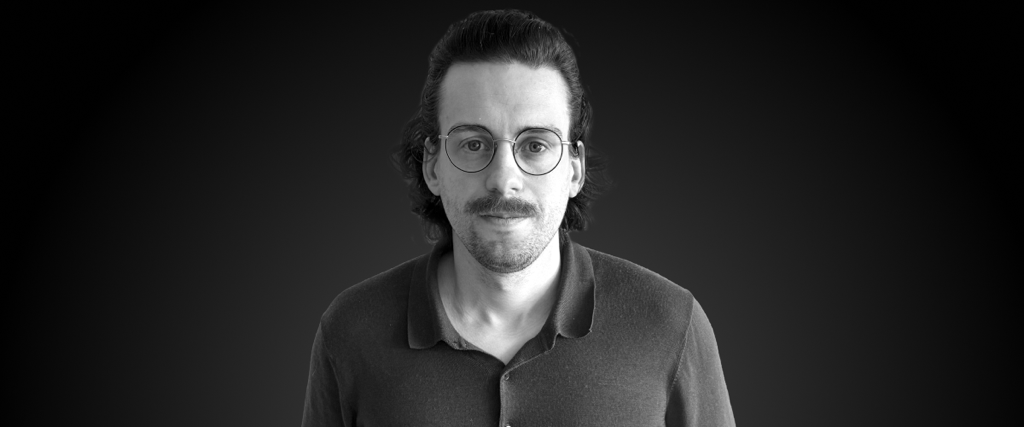
After joining SBS as an intern in 2016, Théo Voisin is now a Junior Test Architect. Currently transitioning between two teams, he’s about to join a DevSecOps team full-time (development, security and operations), where he’ll continue working on automation and industrialisation topics. Passionate about technology, he enjoys working with Java (latest versions of Spring Boot), Angular, and AI, while remaining clear-eyed about its limitations. And while his days revolve around software architecture, his evenings are just as busy… with 3D printing! A look at a profile that’s both highly technical and creative.
What does your role as a software architect involve?
The idea, on our side, is to automate everything that used to be done manually by developers: checking builds, running tests, analysing code quality and security. Ultimately, we’re even aiming to automate deployment.
My role focuses mainly on end-to-end and non-regression testing. Using robots that continuously simulate user scenarios, we can avoid nasty surprises before releases. It’s a really exciting challenge because you need to master the tools and fully understand our processes to automate things properly.
Concretely, what does automation look like in practice?
Right now, I’m working on a project aimed at improving test automation for the SBS Core Amplitude solution. The idea is to automatically check that the code works as expected, without errors, every time a change is made.
Performance is a big challenge on this project, and a lot of the work is about making tests more efficient. That requires a lot of coordination with the teams. For example, we think about on-demand environments that can spin up a full Amplitude instance just to run tests, while keeping execution times reasonable. The goal? Become more agile while improving overall quality.
Automation already saves a lot of time. But over the past year, AI has entered your daily work. What impact has it had?
For about a year now, we’ve really integrated AI into our development tools. The main benefit is clearly speed. On test automation projects, for example, I develop almost everything with AI, and the time saved is huge. It allows me to work on other projects at the same time.
It’s also very useful for quickly understanding existing code, even when it’s old or poorly documented.
That said, you need to stay cautious. The risk is trusting it too much without really looking at the code behind it. Over time, you can lose track of what you’ve actually built. And when you need to take things over manually, it can feel like you’re stepping into a project you don’t know, even though you’ve been working on it for two weeks. That’s the real danger.
Speaking of caution, what challenges do you face as a software architect?
There are quite a few, actually. The first challenge is simply getting an application to work! Then there’s meeting the need: sometimes for an external client, sometimes for internal teams, like when it comes to automated testing. In all cases, we start from a need and try to find the best technical solution to meet it.
I also realise that our job requires very broad knowledge. IT isn’t just about mastering a language like Java ; you need to understand tools, architectures, best practices… and support the team as these topics constantly evolve. And finally, there’s the whole monitoring and research aspect: identifying what’s really relevant for us, putting it into practice, and sometimes convincing colleagues. That’s very much part of the daily challenge.
What do you enjoy most about architecture?
What I enjoy most is designing a solution as a whole, not just developing. For example, when I worked on a DMS (Document Management System) connector that linked our core banking system to external data managers, I really enjoyed thinking through a solution that was both useful for users and technically solid.
There were real technical challenges to solve, and it was the first time I had genuine freedom in architectural decisions. That combination of understanding the need, technical thinking and decision-making is what motivates me most.
On a more personal note, do you have hobbies that influence how you work, or the other way around?
I do quite a bit of 3D printing. And actually, what I enjoy most isn’t just printing an object, but designing it. I mainly create practical, often custom-made objects for the home. That means thinking upfront about how the object will be used, the constraints, the forces applied to it, its strength, and also how it’s going to be printed.
Looking back, I realised there’s a real parallel with what we do here. Whether it’s a physical object or a software solution, you need to anticipate everything that might happen right from the design phase. And then there’s the continuous improvement aspect: starting from something that already exists, modifying it, improving it… a bit like in open source or software development. That’s really what I love.
You may also be interested in other talent portraits from our insights catalog.