
- AI-enabled cores boost loyalty, with satisfied customers 6× more likely to stay.
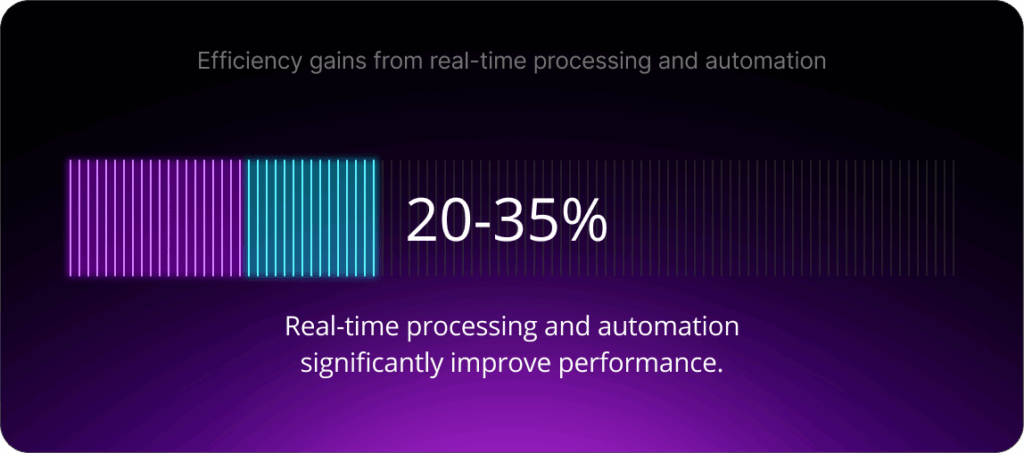
- Real-time, event-driven processing drives efficiency, with automation improving operations by 20–35%.
- Modernized cores unlock profitability, as modernized banks achieve 21% lower operating costs and 42% higher revenue growth.
In the first two articles of this series, we explored how legacy core banking systems are constraining innovation and customer experience, as well as how product and pricing management platforms can help banks respond by decoupling product innovation from rigid back-end systems. These platforms have proven that agility is possible. Banks can launch products faster, tailor pricing to customer behavior and compete more effectively in a digital market. Yet, as powerful as these solutions are, they can only go so far. Banks that fail to modernize their underlying core remain tethered to slow, siloed and costly infrastructures. True agility today is scalable, data-driven and increasingly AI-enabled, and it demands more than front-end modernization. A modern core capable of real-time data processing, intelligent decisioning and automation is essential. Without it, even the most advanced product and pricing engines will eventually plateau.
To move beyond these limits, banks must reimagine the core itself: modular, cloud-native, and built to harness data and AI at scale.
Why product & pricing solutions are only the first step
Product and pricing management platforms have been an important bridge between legacy systems and digital banking ambition. They deliver agility at the front end, allowing banks to adjust pricing dynamically, launch new offerings faster and personalize customer propositions.
However, while their impact is significant, these platforms stop short of tackling the underlying constraints within the core. They enhance flexibility and speed in customer-facing layers, but the underlying infrastructure, which is often built on monolithic architectures and batch processing, continues to slow down operations and restrict innovation. Legacy bottlenecks persist. Siloed data, rigid integrations and overnight processing mean that insights are delayed, workflows are fragmented and real-time responsiveness is impossible. The result is a gap between the speed of customer demand and the speed at which banks can deliver.
Front-end agility, while valuable, has a ceiling. Banks lacking a sophisticated core capable of real-time decisioning, automation and scalability can’t fully harness data and AI to deliver faster services and continuous innovation. To achieve true enterprise agility, the foundation itself must evolve. Product and pricing modernization proves agility is achievable; core modernization makes it sustainable.
What full core banking transformation entails… and why it matters
Full core transformation is not a single project or technology swap. It represents a fundamental shift toward a flexible, data-driven operating model that underpins every digital initiative. Below is a breakdown of the key capabilities that define a modern, future-ready core, and the value they unlock for banks and their customers.
AI-enabled smart core
The next evolution of the modern core integrates AI and machine learning directly into decisioning and automation layers, turning data into real-time intelligence. Rather than relying on manual triggers or static business rules, AI-enabled cores can anticipate customer needs, automate responses and optimize operational workflows across channels.
This capability allows banks to move from reactive service to proactive engagement, offering personalized offers, fraud detection and credit decisions in milliseconds, ultimately improving the customer experience. Such an improvement should not be underestimated in terms of banks’ bottom lines, with research showing that customers who are satisfied with their banking experiences are six times more likely to stay with their bank than those who are not.
Furthermore, an AI-enabled core continuously learns from every interaction. By feeding transactional and behavioral data into machine learning models, banks can refine risk assessments, improve operational forecasting and detect emerging trends before they impact performance. Combined with unified data architectures, this intelligent layer becomes the brain of the bank, linking customer experience, risk, operations and strategy through a single, adaptive system.

Modular, Cloud-native & ecosystem-ready architecture
Modern core transformation begins with breaking monolithic systems into modular, API-first components that can evolve independently. This modularity enables faster product innovation, continuous integration and low-risk change, allowing banks to roll out updates or new capabilities without disrupting critical operations.
A modern core must integrate seamlessly across product catalogs, payments, risk, compliance and customer channels. When integration breaks down, customer experiences fragment and costs rise. By exposing standardized APIs and leveraging event streams, banks can ensure systems, fintech partners and data platforms interoperate in real time, extending reach across digital ecosystems while maintaining control and compliance.
Cloud-native and open architectures reinforce this flexibility by providing scalability, resilience and security at the platform level. Together, these principles form the foundation of a composable, future-ready core – one which is built for real-time data, open collaboration and continuous innovation at scale.
Real-time, event-driven processing
Modern cores enable instant payments, live decisioning and AI-driven personalization. By eliminating batch delays, banks can respond to customer behavior in the moment, improving experience and reducing risk.
Real-time event processing also allows data to flow continuously across channels, powering dynamic credit scoring, fraud prevention and automated compliance checks. EY estimates that real-time processing and automation can increase operational efficiency by 20–35 percent, underscoring its role as a foundation for speed and intelligence in modern banking.
Centralized data & single source of truth
In a modern core, a unified data platform serves as the connective backbone of the bank, powering capabilities from analytics and AI to regulatory compliance. Centralization replaces fragmented ledgers with a single, trusted data layer that gives real-time visibility across portfolios, compliance frameworks, and customer relationships.
With core data flowing through one architecture, exposures and transactions can be captured consistently across the organization, helping leaders build a more complete view of credit, liquidity, and market risks. Unified data environments have been shown to improve forecasting accuracy and operational control, enabling closer, continuous oversight of capital and funding positions. They also support faster reconciliations and compliance reporting, as well as timelier performance insight. By bringing data together enterprise-wide, banks create a foundation for faster, more confident decisions, linking operational control with customer value through shared intelligence.
Business outcomes & value
The payoff is tangible: faster product launches, lower operational costs, enhanced resilience and stronger competitive positioning. Modern cores streamline complex processes, reduce manual intervention and enable new products and services to be brought to market in days rather than months.
They also strengthen reliability and scalability, allowing banks to adapt quickly to changing markets and customer demands. Ultimately, core modernization translates technology investment into measurable business performance, which improves efficiency, agility and long-term profitability.
Approaching core banking transformation without disruption
While the rewards of modernization are compelling, the journey itself is complex, spanning technology, governance and culture. The biggest challenge lies in the scale and risk of replacing a system that touches every part of the bank. Traditional “rip and replace” approaches are costly, disruptive and prone to failure, with only around 30% of core banking transformations actually succeeding in migrating all ledgers and products to new systems.
To overcome these challenges, leading institutions are embracing progressive modernization: a step-by-step approach that begins with modular components, such as product and pricing engines, before extending transformation to the full core. This modular approach limits risk, maintains business continuity and delivers incremental value along the way. AI and automation are now transforming how modernization programs are executed. Intelligent tools can analyze legacy code to map dependencies, automate migration and testing, and simulate system changes before deployment. This significantly reduces timelines and human error while improving system integrity.
Ultimately, success depends on more than technology. Effective modernization requires strong governance and a culture that treats transformation as a strategic business initiative, rather than a one-off IT project. The most successful banks combine this cultural readiness with experienced partners who bring proven architectures, accelerators and delivery models. By starting small, proving value early and scaling with confidence, banks can modernize without disruption and build the foundation for long-term agility and resilience.
From tactical modernization to strategic reinvention
Product and pricing platforms have helped banks demonstrate what agility looks like. But they are not enough on their own. Core modernization is the lever that allows institutions to scale that agility, deliver deeper personalization and foster continuous innovation across the enterprise.
The transition is complex and not without risk, but it has become essential. The opportunity cost of inaction is growing: legacy cores consume up to 80% of banks’ IT budgets simply to remain operational, while modernized banks are achieving 21% lower operating costs and 42% higher revenue growth than peers. In a rapidly evolving digital economy, doing nothing is the costliest option. The smarter path is progressive modernization: modular, data-first, AI-enabled and cloud-native. Banks that modernize strategically will deliver new products faster, reduce costs, enhance resilience and customer experience, and stay competitive in a landscape defined by constant change.
SBS Digital Core platform, coupled with the SBS Data Platform, supports this journey. By empowering banks to modernize progressively and de-risk transformation, banks that partner with SBS can continue to deliver agility and innovation today, while building the foundations for tomorrow.