Imagine this: your favorite streaming service stops working, not because you cancelled it, but because your bank issued you a new card. Behind the scenes, a silent churn has happened. This is involuntary churn, when a customer intends to keep a subscription but fails to make a payment due to expired, lost, or reissued cards. The impact is massive. According to data compiled by Recurly, the global subscription sector is projected to reach a market value of £1.2 trillion by the end of 2025 and could lose £102 billion this year alone, primarily due to payment failures, fraud alerts, and authentication drop-off.
But the problem goes deeper than reissued cards. Card networks replace millions of cards globally every year, triggering a cascade of renewal failures, fraud alerts, gateway errors, insufficient funds, and repeated strong customer authentication (SCA) checks, all of which contribute to failed payments and lost customers. The UK Financial Conduct Authority (FCA) also flagged the issue in a recent report, which found that recurring card payments, known as Continuous Payment Authorities, regularly generate consumer complaints related to failed renewals and unclear cancellation procedures. For merchants, each interruption increases operational costs. For subscription-based sectors, such as media, utilities, wellness, and SaaS, this unpredictability impacts margins and erodes trust and loyalty.
A2A: Real-time Payments with no card in sight
At the root of the problem is the reliance on cards, a model prone to expiry, reissuance, fraud triggers, and SCA failures. Open banking offers a fundamentally different approach through account-to-account (A2A) payments, designed for resilience and transparency. Instead of storing credentials, merchants request payments directly from customers’ bank accounts, authorised with secure, digital consent and settled instantly through rails such as Faster Payments in the UK or SEPA Instant in the EU. This model removes friction for customers and inefficiency for merchants, setting the stage for scalable and flexible subscription services.
Authentication occurs once at setup and renewals proceed automatically within the agreed mandate. This approach removes card-expiry risk and intermediated fees while ensuring protection and transparency. Mobile wallets, such as Apple Pay and Google Pay, also play a useful role in reducing card‑on‑file failures. According to a report by Ecommpay, by replacing raw card numbers with tokens, credentials are refreshed when cards are reissued or expire, so renewals are less likely to break. Yet these remain card transactions, so issuer authorisation rules, scheme fees and card‑specific failure modes still apply. For subscriptions, A2A and in the UK, VRP, removes the card entirely: consent‑based, bank‑to‑bank payments that settle in real time over Faster Payments and SEPA Instant, with fewer points of failure.
VRP: The missing piece in subscription payments
Open banking’s promise for subscriptions is based on a new foundation called Variable Recurring Payments (VRP), a consent-first model built to replace static card-on-file and direct debit systems. It eliminates silent churn, adds transparency, and gives merchants greater flexibility in how they manage billing. VRP is powered by Payment Initiation Services (PIS), which enable merchants to initiate payments directly from a customer’s bank account with secure, one-time consent without relying on cards. VRP builds on this foundation by allowing merchants to collect payments within parameters agreed to by the customer, such as monthly limits or fixed intervals.
Customers can revoke or modify consent instantly, avoiding the frustration of buried cancellation flows. Meanwhile, Request to Pay (RTP) complements VRP by enabling user approval before each transaction, ideal for billed or usage-based subscriptions. Together, PIS, VRP, and RTP offer a modular approach to recurring billing, all anchored in transparency and real-time execution. All of this is powered by real-time payment rails, such as the UK’s Faster Payments and the EU’s SEPA Instant, making settlement near-instant and reconciliation simpler.
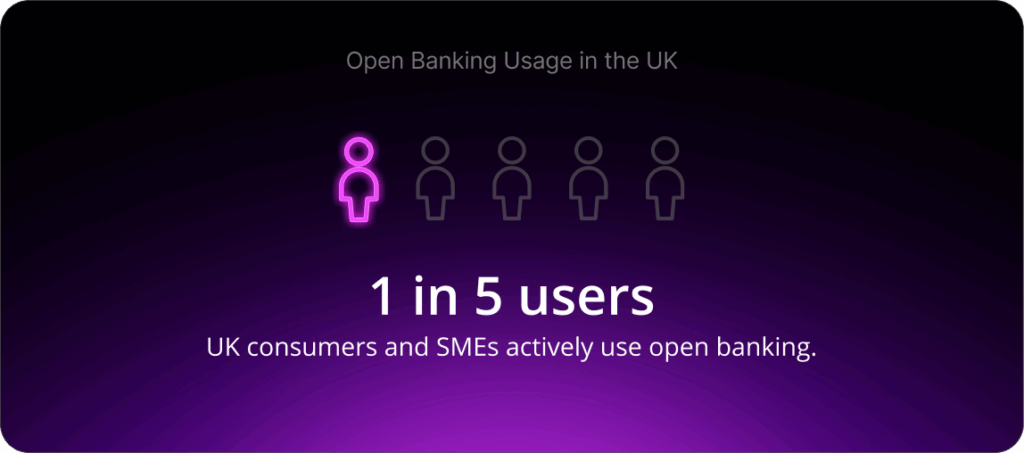
Adoption is already gaining momentum. Data from Open Banking’s Limited Impact report shows that one in five UK consumers and small businesses now actively use open banking, while 31 million open-banking payments were made in March 2025 alone.
“With 145 live third-party providers and 70% annual growth in payments, open banking enables a thriving sector of technology companies and an ecosystem worth around £4 billion to the economy,” the report notes, adding that VRP accounted for 13% of these transactions.
Global rules are catching up to customer expectations
Globally, regulators are laying the groundwork for open banking to scale beyond one-off payments into recurring, consent-driven billing. These efforts enable new infrastructure, such as real-time rails, reinforcing consumer protections and building confidence in A2A subscription payments.
In Europe, the EU’s Instant Payments Regulation established cost and access rules to make instant A2A transfers affordable and accessible for everyday use, including recurring payments. This is a critical foundation for subscriptions to move away from card-based models. Further momentum is expected with the rollout of PSD3 and the Payment Services Regulation (PSR), which are expected to come into force in 2026. These updates will refine areas such as liability, authentication, and data-sharing, providing a coordinated framework across the EU.
In 2024, the European Payments Initiative introduced Wero, a digital wallet and payment system enabling instant peer-to-peer transfers. The solution is progressively expanding beyond P2P to cover e-commerce and point-of-sale payments. Wero is currently live in Germany, France, and Belgium, with further rollouts underway or planned in the Netherlands, Luxembourg, and Austria as part of EPI’s broader European expansion strategy.
In the UK, regulators are defining the next stage of open banking. In 2023, the Joint Regulatory Oversight Committee (JROC) outlined a roadmap that focuses on five key themes that will enable open banking in the UK to develop in a “safe, scalable and economically sustainable way,” the government said in a statement at the time. The themes include boosting the availability and performance of open banking, mitigating financial crime risks, and ensuring consumer protection. The JROC will also focus on improving information flows to third-party providers and end users and promote additional services, such as using non-sweeping VRPs as a pilot.
According to an update by the UK’s Payment Systems Regulator (PSR), the JROC’s dedicated VRP working group also plans to scale these capabilities to benefit more consumers and businesses across a range of sectors. Meanwhile, the FCA’s Consumer Duty, implemented in 2023, strengthens consent clarity, ease of cancellation, and refund transparency in open banking, standards that digital mandates meet more effectively and where traditional card payments often fall short.
In the United States, regulatory and infrastructure shifts are progressing more cautiously. The Consumer Financial Protection Bureau has proposed the Personal Financial Data Rights rule under Section 1033 of the Dodd-Frank Act, aimed at strengthening consumer control over financial data and establishing a national open-banking framework. However, the rule is currently subject to validation and legal review, delaying its formal adoption and large-scale implementation. Real-time payment infrastructure is also maturing in the US. The Clearing House’s Real Time Payments (RTP) network continues to grow, while the Federal Reserve Bank’s FedNow Service, launched in 2023, has surpassed 1,300 participating institutions, paving the way for future pay-by-bank adoption in recurring use cases.
Regulators in the Middle East, Africa and India are pursuing similar initiatives and moving quickly to modernise payments and embed open banking principles. The Saudi Central Bank is developing an open banking policy with mandates for consented data and instant payment services.
In the UAE, the launch of Aani, a national instant payments platform operated by Al Etihad Payments, marks a significant step forward for the country’s cashless ambitions. With more than 1.5 million users and 80,000 merchants already onboard, Aani enables instant transfers through mobile numbers, email addresses, and QR codes, eliminating the need for IBANs and making subscription payments more seamless.
India is at the forefront of real-time payments, having launched the Unified Payments Interface (UPI) in 2016. Developed by the National Payments Corporation of India, it allows users to link their bank accounts to the UPI mobile app to manage their money in real time. According to data published by India’s Press Information Bureau, UPI accounts for 85% of the country’s digital payments and handles more than 640 million transactions daily.
Brazil’s central bank launched its instant payment system, Pix, in 2020, enabling secure, real-time transfers for users to pay bills, schedule transactions, withdraw money and transfer funds. In June 2025, Pix was further extended with the launch of Pix Automático, enabling recurring debits for subscriptions, utilities, and investment payments, reinforcing Pix as a core infrastructure not only for instant payments but also for recurring payment use cases.
Nigeria, meanwhile, became the first country in Africa to issue an open banking framework and has implemented NIBSS, a real-time, account-based Electronic Funds Transfer (EFT) platform that supports recurring billing infrastructure.
From cost and churn to control and confidence
A2A payments are not just a new payment method. They reshape the economics and experience of subscriptions for both merchants and customers. For merchants, recurring A2A payments help eliminate the card replacement cycle that drives involuntary churn. By removing dependency on card networks, businesses reduce acceptance costs, minimise fraud exposure, and gain faster access to funds.
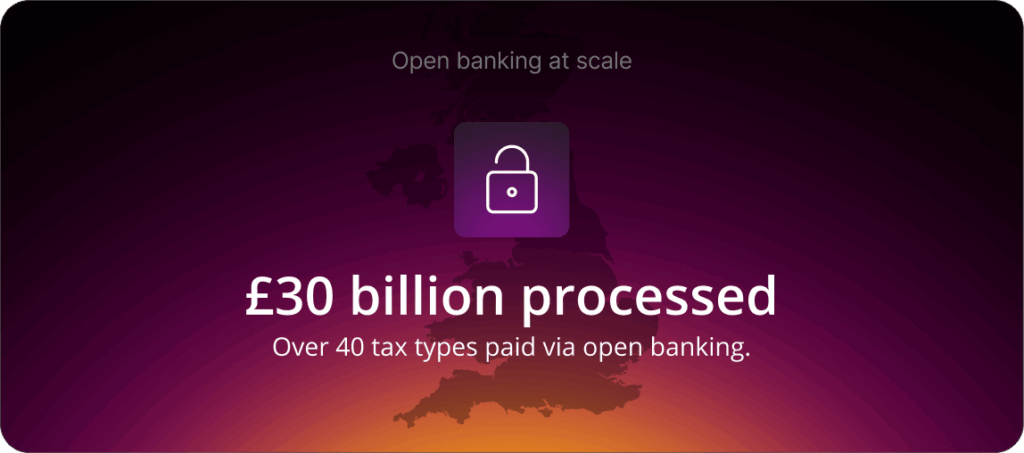
For consumers, it is about control and clarity. Authentication occurs once, mandate details are accessible at any time, and cancellation is immediate. This level of transparency builds trust and aligns with broader consumer expectations for digital services, immediate, transparent, and governed by clear consent rather than stored credentials. Adoption at scale is already evident. In the UK, HM Revenue & Customs has processed an estimated £30 billion in open-banking payments covering more than 40 tax types, according to a report by Global Government Fintech.
Meanwhile, UK utility providers, such as Anglian Water, now offer “Pay by Bank” billing that accelerates reconciliation and lowers processing costs, Open Banking Expo notes in a report. These real-world examples signal that account-based payments are already scaling in operationally complex, high-volume sectors.
As subscriptions evolve, open banking provides a more resilient foundation; one where digital consent replaces silent storage and both sides of the transaction gain flexibility, visibility, and confidence. The shift from passive card storage to active consent not only promises lower costs. It also sets the stage for stronger retention, better margins, and a payments experience that finally matches the expectations of a digital-first customer base.
How SBS can help
SBS now enables banks to integrate Wero, the digital wallet under the European Payments Initiative (EPI), quickly and securely. Acting as an orchestration layer between EPI central services and a bank’s core systems, SBP ensures full compliance with the EPI roadmap. SBS offers the infrastructure to transform open-banking mandates into stable subscription revenue. These capabilities are integrated into our Open Banking Platform, enabling banks, payment services providers, and subscription merchants to launch recurring A2A payments at enterprise scale.
A single API and SDK framework provides Payment Initiation and Account Information Services, as well as a mandate vault for consent-lifecycle management. Adapters for instant payment rails such as SEPA Instant and Faster Payments extend reach across the EU and UK. Our built-in risk, refund, and fraud controls align with PSD3 regulations and UK Consumer Duty standards. The platform also includes connectors for billing systems and payment service providers, dashboards, webhooks, and reconciliation reporting to shorten implementation timelines.