You’ve worked as a DevOps engineer for 7 years now, can you tell me about your job ?
I work in a DevSecOps team, which is a very technical environment. My role is mainly about building tools that help other teams work more efficiently, usually through automation. The goal is to remove repetitive or boring tasks so people can save time and focus on what really matters.
I also contribute to improving the SBP Core Amplitude itself, making it faster and more reliable. But for me, the role goes beyond just the technical side. I really value teamwork, supporting colleagues, sharing knowledge, mentoring, and helping others feel comfortable with what they’re doing. Making work clear, traceable, and collaborative is just as important as writing good code.
You build tools to automate tasks. Can you give an example of something you automated that saved time for your team?
Sure. One project I’m working on focuses on making it much quicker and easier to set up our product for testing. Before clients use our software, we need an environment that looks and behaves like theirs, so we can check that everything works as expected. To do this, we first prepare a safe version of a database (without any real or sensitive data), then install our main product on top of it. This allows us to test how the product performs and how a client would typically use it, before it goes live. Right now, this setup takes a lot of time and manual effort, so we’re building tools to automate the whole process. There are two of us working on it, with the goal of making it faster, more reliable, and easy to repeat whenever needed.
What’s the most satisfying project you’ve worked on as a DevOps engineer?
I really enjoyed automating our test environment setup. When I first started, everything was done manually. It was repetitive, time‑consuming, and honestly quite boring: I had to wait in front of a screen for almost an hour each time. Automating it was a game changer.
What also made it interesting was cleaning things up. The existing tools and scripts had been written by many different people over time, so everything was a bit of a mess. Bringing structure, order, and consistency to that environment, and turning it into something reliable and easy to use, was very satisfying for me.
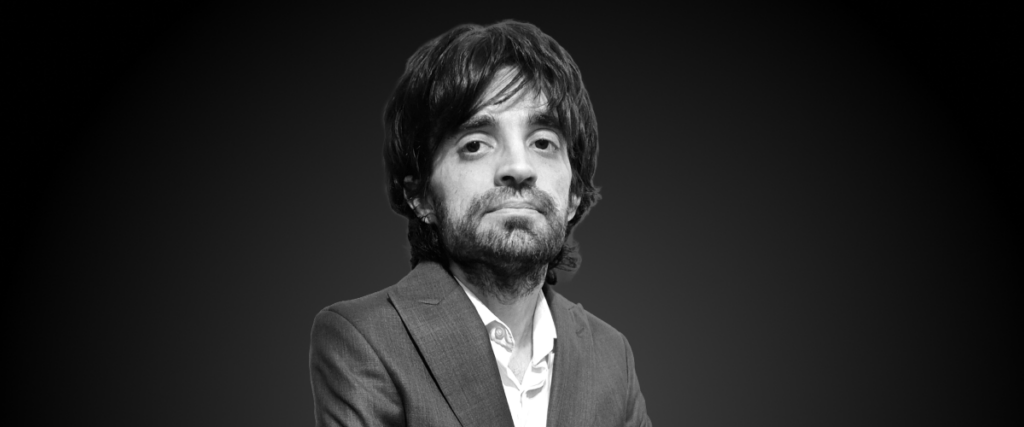
Most people know you as a DevOps engineer, but can you share something about yourself that most people don’t know?
I started my career as a tourist entertainer in hotels before joining SBS. I led a wide range of activities for tourists, like yoga, aqua gym, and group games. I worked with all age groups (adults, kids, and teenagers) in different parts of Spain, including Catalonia near Barcelona, as well as Mallorca and Menorca.
You began your career in a very different world. What motivated you to transition into development?
Working as a tourist entertainer was a really fun job, well paid, very social, and full of great experiences but it was also very seasonal. Most of the work was from March to October, with a few short periods around Halloween and Christmas, and then several months with almost nothing.
I was looking for something more stable. Even though I hadn’t studied technology (I come from a civil engineering background) I’ve always enjoyed maths and English. For me, coding is a mix of both: logic and language. People sometimes say that transition isn’t possible, but I found that once you learn how to read code, it starts to make sense. That’s what motivated me to move into development. (You may also be interested in Marie-Lyse Charrière’s career change into developement.)
What is it that you like most about coding?
What I like most about coding is seeing the final result. When a piece of code has been really difficult and full of frustrating moments (when you keep asking yourself why it doesn’t work, for instance) the feeling when it finally does work is incredibly satisfying. That moment of success, when you’ve solved the problem and everything comes together, is the best part of coding for me.
Alongside your career, what projects or hobbies fulfill you?
Alongside my career, I’m also involved in a few side activities. I volunteer with the Red Cross, teaching children aged 6 to 14 who face social difficulties. During the summer, I’m also an environmental volunteer, helping to protect a natural park.
On a more personal level, I really enjoy learning languages. I’m fluent in German, French, and English, and I regularly read in German to keep it fresh. I’ve recently started learning Russian as well… So with Spanish, German, English, French, and Russian, I like to joke that I have most of Europe covered.
What’s the most important lesson that you’ve learned so far?
The most important lesson I’ve learned in my career is the value of teamwork and how you treat people. It doesn’t matter how good you are technically, if you don’t respect others or work well with your colleagues, it affects everything. For me, treating everyone the same way is essential, no matter who they are or what they do. I learned that early on, whether working with kids, colleagues, or people from very different backgrounds. People always feel it when they’re not treated with respect. Good human relationships are what really make projects, teams, and careers work.
Would you like to join the SBS (ex-Sopra Banking Software) adventure? Discover all our job offers on our Careers page by clicking on this link.
You may also be interested in other talent portraits from our insights catalog.