
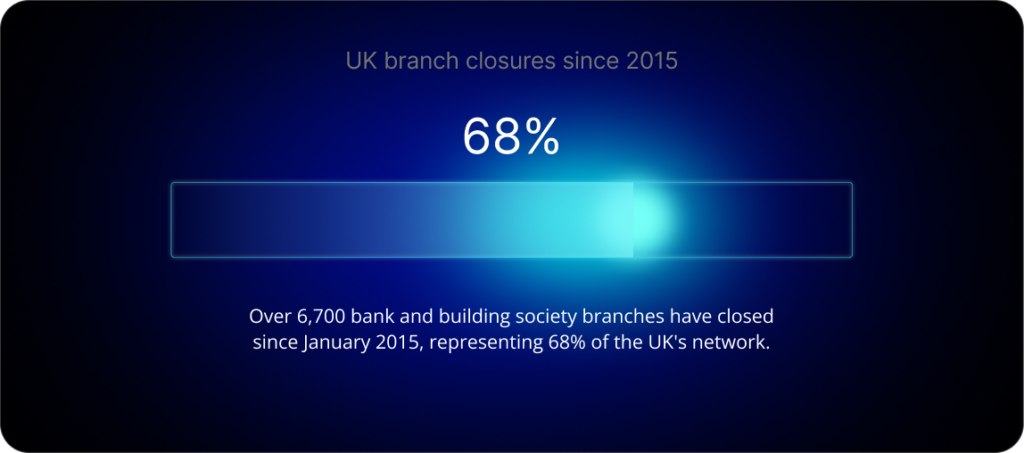
- More than 6,700 bank and building society branches have closed since January 2015, representing around 68% of the UK’s network.
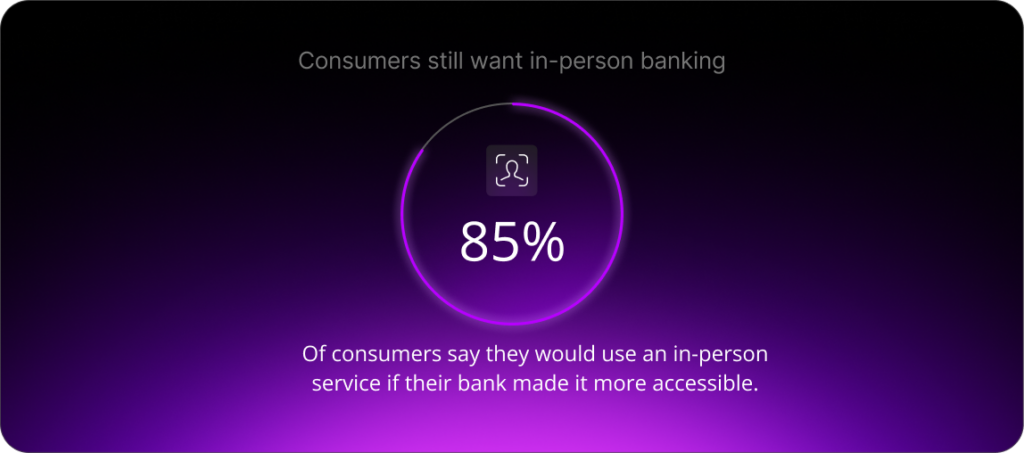
- SBS market research found that 85% of respondents would use an in‑person service if their bank or building society offered it.
- The future branch is not defined by bricks and mortar, but by its ability to show up when and where people need human support.
At the recent SBS Connect London 2026, Ben Verdin, Head of Product Management and Strategy for UK Lending at SBS, hosted a session on The Future of Branches and Human Advice. Against a backdrop of ongoing bank branch closures, this is a theme that resonates across UK banks and building societies alike. While everyday banking has gone digital, life’s most important financial moments remain deeply human.
Payments, transfers and balance checks are now firmly digital‑first. But when it comes to buying a first home, saving for a wedding, planning a once‑in‑a‑lifetime holiday, or putting money aside for children’s futures, consumers still value the reassurance, trust and guidance they can only get from another person. The challenge for financial institutions is not whether branches still matter, but how they evolve to achieve the perfect balance between in-person and digital services.
A changing landscape, not a disappearing need
Branch closures are often used as shorthand for declining relevance, yet data tells a more nuanced story. As of April 2026, more than 6,700 bank and building society branches have closed since January 2015, representing around 68% of the UK’s network, according to consumer group Which. Closures continued through 2024 and into 2025, driven by cost pressures and declining footfall for routine transactions.
At the same time, digital adoption has surged. The House of Commons Library reports that only 9% of payments were made in cash in 2024, while just 7% of UK adults had not used online or mobile banking in the past year. It is fair to say that those who rely on in-branch services and reject digital adoption do so because their needs are better served by branches. The bulk of the population may have adapted, and convenience has won for everyday needs, but big life moments don’t happen every day.
This shift has not removed the need for in‑person banking. The same House of Commons report showed that in 2024, 26% of UK adults still used face‑to‑face branch services at least once during the year, often for more complex or regulated journeys. The branch is used less frequently, but when it is used, it matters more.
What consumers are really telling us
Ahead of SBS Connect London, our team conducted market research in April 2026 that reinforces this view. Of the 106 people surveyed, 88% had not visited a branch in the previous six months, and 91% of those said this was because their local branch had closed, not because they no longer valued in‑person support. Meanwhile, 85% said they would use an in‑person service if their bank or building society offered it in a more accessible way.
This is an important distinction. Industry research may show that consumers are moving to online services, but that does not mean they have rejected in-person services. When branches disappear entirely, people adapt, but that should not be confused with an indication of their preference.
Independent research supports this. KPMG found that while 21% of UK consumers had not visited a branch in the past year, 64% said they would miss their local branch if it closed, particularly for reassurance and support to navigate complex situations.
Life moments still drive the need for human advice
The housing market is a great example. A Finder report showed that in 2025, 967,000 people bought their first home, higher than the 20-year annual average of 739,000. First‑time buyers now make up 54% of all mortgage‑backed home purchases, the highest proportion on record.
Behind these figures are significant emotional and financial decisions. The average first‑time buyer deposit reached £61,090, with an average purchase price of £311,034, meaning many buyers are committing to the largest financial decision of their lives later than ever, at an average age of almost 34.
Savings behaviour tells a similar story. The Office for National Statistics reports that the UK household saving ratio rose to 11.1% in early 2024, as people rebuilt buffers and planned for future goals amid economic uncertainty. Weddings, childcare, education and long‑term security are personal milestones many of us go through, and confidence and clarity can be the difference.
These are not journeys consumers want to rush through an app or resolve with a chatbot. They are moments where trust is built through conversation.
What branch closures mean for the branch’s role
Ben Verdin’s Connect session challenged organisations to stop thinking of branches as places and start thinking of them as capabilities. The future branch is not defined by bricks and mortar, but by its ability to show up when and where people need human support.
This could mean:
- Smaller advisory hubs rather than large transactional spaces;
- Mobile or pop‑up branches embedded in communities;
- Colleagues equipped with full customer context, not fragmented systems;
- The ability for journeys to start digitally and finish face‑to‑face, or vice versa.
Crucially, it means removing the legacy constraints that make in‑person services expensive, inflexible and slow to change.
Why the digital branch matters now
This is where the digital branch becomes an enabler rather than a destination. By decoupling branch servicing from fixed infrastructure and legacy teller systems, organisations gain the flexibility to preserve human advice without carrying unsustainable costs.
For building societies, this supports their mutual values and community presence, allowing them to meet members where they are while maintaining compliance and consistency. For banks, it provides a way to meet regulatory obligations, manage access‑to‑cash requirements and deliver high‑value advice without treating branches as a liability.
The message from Connect 2026 was clear. The question is no longer whether branches survive, but whether financial institutions can redesign them around what really matters.
Why branch closures make in-person moments matter more
Everyday banking will continue to move online, but life does not happen in transactions alone. It happens in decisions, milestones and gaining clarity in moments of uncertainty. As branch networks shrink, the importance of getting the right in‑person experience increases. Organisations that succeed will be the ones that combine digital convenience with accessible, human‑led advice, delivered flexibly and sustainably.
At SBS, decades of experience working with UK banks and building societies have shown that the future of branches is not about going backwards. It is about evolving forward, keeping what matters most and enabling it through modern technology.
Click here to learn more about how SBS is helping organisations reimagine in‑person banking.
Questions and answers: Branch closures and the future of digital branches
From January 2025 to April 2026, more than 6,700 bank and building society branches have closed, representing around 68% of the UK’s network, according to consumer group Which. The closures are being driven by cost pressures and declining footfall for routine transactions amid a surge in online and mobile banking.